RESPOND Safeguarding Framework
In partnership with TASIS England

RESPOND bridges the implementation gap between knowing what to do (policy) and how to do it (practice). It equips staff and students to act as trauma-informed, context-aware active bystanders — translating statutory duties into navigable, compassionate responses in real time.
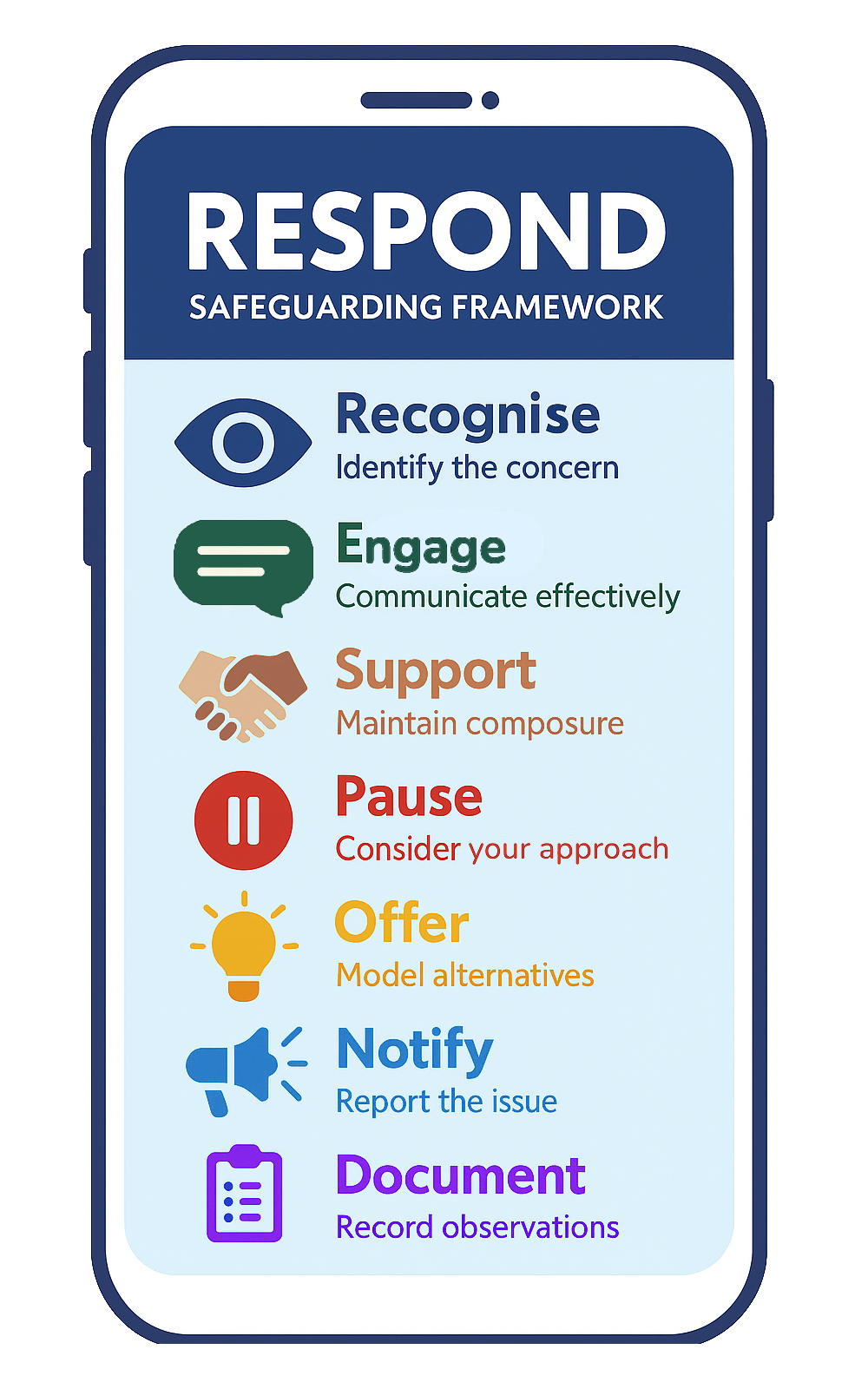
The Seven Steps
Click each step to explore the detailed guidance
The ACT Foundation
The professional mindset that powers RESPOND
Active Intervention
Inaction is not neutral. Move from passive observation to safe, proportionate action.
Contextual Safeguarding
Harm occurs beyond families — in peer groups, online, and communities. Consider the full picture.
Trauma-Informed Practice
Trauma alters memory and behaviour. Respond with safety, dignity, and compassion.
Cultural Competence & Inclusion
Responding with awareness across cultures and identities
In diverse school communities, cultural background shapes how children experience harm, express distress, and engage with support. Effective safeguarding requires us to move beyond assumptions and respond with genuine curiosity and respect.
Communication Styles
High-context cultures communicate indirectly — meaning through tone and silence. Low-context cultures are explicit and direct. Neither is better; both require attentive listening.
Power Distance
Some children defer to authority and find it difficult to disclose concerns about adults. Create multiple pathways for reporting and reassure children that speaking up is safe.
Collectivist vs Individualist
In collectivist cultures, family honour may influence disclosure. Children may fear bringing shame. Acknowledge these pressures while centring the child's safety.
Identity & Intersectionality
Experience is shaped by culture, gender, sexuality, disability. LGBTQ+ students, students with SEND, and minority students may face unique barriers to disclosure.
The Equality Act 2010 & Safeguarding
Understanding protected characteristics and which children face heightened safeguarding risks
The balance: Cultural sensitivity must never override child protection. Harm is harm regardless of context. But how we respond can be adapted to build trust.
Ask RESPOND
AI-powered guidance based on RESPOND principles and safeguarding best practice
Need safeguarding guidance?
Ask RESPOND Practitioner provides practical, step-by-step support based on the RESPOND framework and safeguarding best practice. Refer to KCSIE 2026 (effective 1 September 2026) and your school's current safeguarding procedures when making decisions. Get real-time guidance on how to recognise, engage, and support a young person.
Responses are for guidance only — always share safeguarding concerns with your DSL, never work in isolation.
Complex case
consultation
Ask RESPOND Professional offers peer-level decision support for threshold decisions, multi-agency coordination, statutory compliance queries, and complex case management. Designed for experienced safeguarding professionals.
Responses are for guidance only — always consult your safeguarding supervisor, never work in isolation.
Medical guidance
when it matters
Ask RESPOND Medical provides structured medical guidance for Health Center staff and houseparents. Get support for student health presentations, duty of care decisions, and when to escalate — with direct access to emergency contacts.
Responses are for guidance only — always apply clinical judgement and contact your DSL or the Health Center directly in an emergency.
Frequently Asked Questions
Common questions from staff about using RESPOND
No — RESPOND is cyclical, not linear. In real situations, you might jump between steps, revisit earlier ones, or skip steps entirely depending on the context. For example, you might Recognise, then Pause, then go back to Engage. The framework is a guide, not a rigid checklist. See the RESPOND Helix →
Both. RESPOND guides your individual response in the moment — what you see, say, and do. But safeguarding is always collective. Once you Notify, the DSL and wider team take over. You're not expected to complete every step alone.
You don't need to recall every step perfectly. The most important things are: notice something (Recognise), listen without leading (Engage), tell the DSL (Notify), and write it down (Document). If you do those four, you've done your job well.
The reporting system is for Document (and sometimes Notify). Engage is what you do in the moment — listening, asking open questions, being present. Recording on the reporting system comes after, when you're recording what happened. Don't worry about logging while a child is talking to you.
Often, yes — and that's exactly right. Your role is typically Recognise → Engage → Support → Notify → Document. The DSL then leads on assessment and referral. But RESPOND helps you handle those crucial first moments well, which can make all the difference to a child.
Yes, though you'll adapt it. With younger children, Recognise relies more on behavioural observation than verbal disclosure. Engage might mean play-based interaction rather than direct questioning. The principles remain the same — notice, listen, support, share, record.
That's normal. In urgent situations: ensure safety first, then get help (Notify). You can work through the other steps afterwards. RESPOND is designed to build confidence through practice — the more you use it, the more natural it becomes.
RESPOND adds crucial steps that the 4 Rs miss: Support (being a calm presence), Pause (thinking before acting), and Offer (explaining next steps to the child). These steps are where staff often feel most uncertain — and where trauma-informed practice matters most.
Insights & Thought Leadership
Perspectives on safeguarding practice, leadership, and implementation
How It All Fits Together
The RESPOND Safeguarding Framework
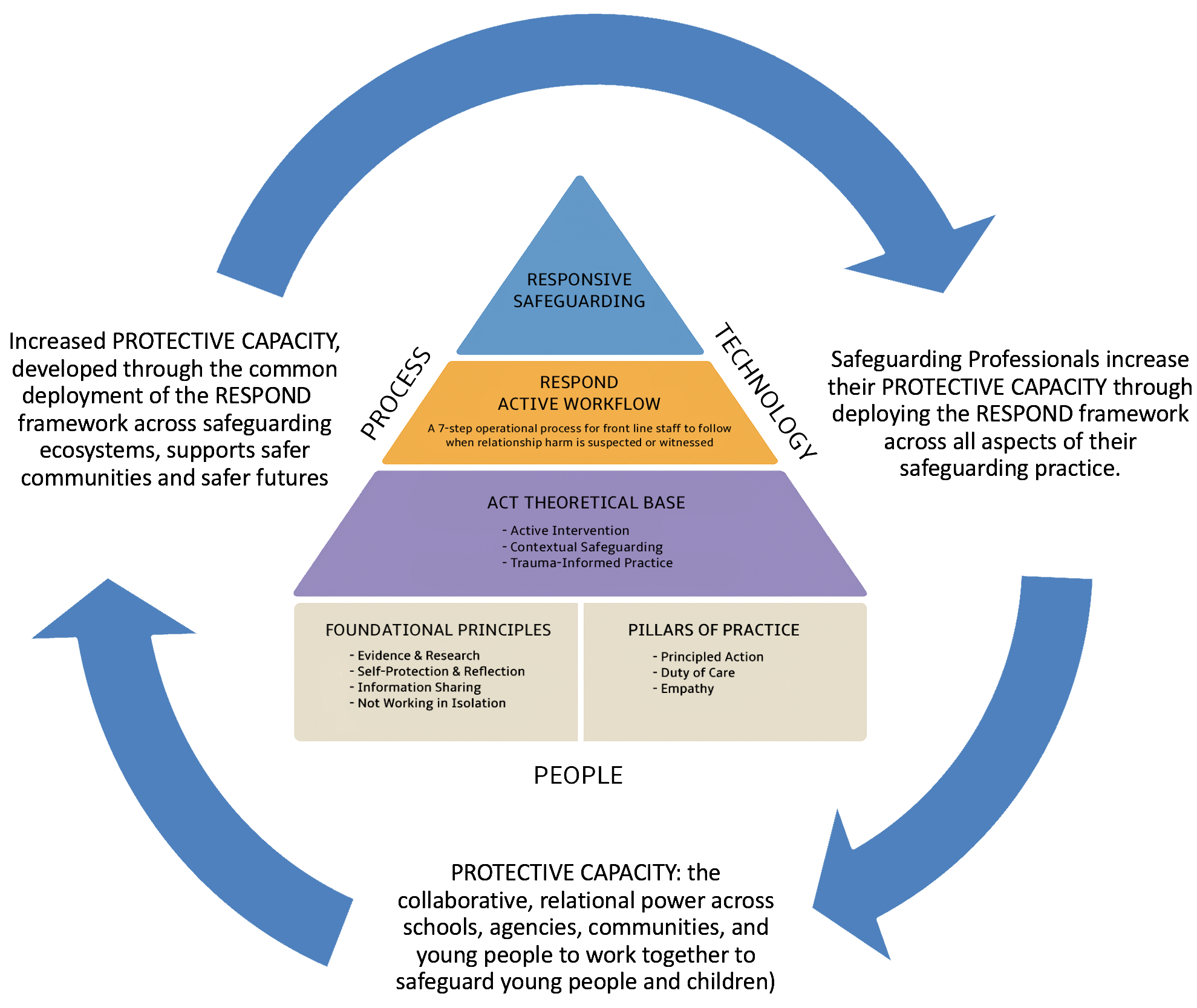
Protective Capacity®
When everyone shares this framework, your collective ability to safeguard children multiplies.